
Taiwan’s Guest Numbers Hit a Record. Why Are Rooms Still Hard to Fill?
Published:August 27, 2026
Author: H& Hospitality Consulting Team
In 2025, Taiwan’s lodging establishments welcomed 82.09 million guest visits, surpassing pre-pandemic levels and setting a record. Yet guesthouse owners may still feel that ‘rooms are hard to sell.’ The reason is not that guests have disappeared: room supply has grown too, occupancy has remained flat, and the market has shifted from competing over who has rooms to who has a more distinctive offering.
82.09 million visits
In 2025, Taiwan recorded 82.09 million lodging guest visits, up 3.29 million from the previous year and surpassing the 79.81 million in 2019 to set a new record
45–47% occupancy rate
From 2023 to 2025, Taiwan’s lodging occupancy rate stayed between 45% and 47%. Guest numbers rose, but room supply rose at the same time.
70% of travelers
About 70% of travelers show strong interest in nature- and ecotourism-focused accommodations; around 25% want to get away from urban settings.
More Guests, but No Improvement in Occupancy
The Tourism Administration announced good news: Taiwan’s lodging establishments welcomed 82.09 million guest visits in 2025, up 3.29 million from the previous year and surpassing the 79.81 million recorded in pre-pandemic 2019—a new all-time high.
It sounds like great news. But if you run a guesthouse, this figure might make you frown: “There are clearly more visitors—why is it still so hard to fill my rooms?”
This report happens to explain why.
The pie is getting bigger, but more people are sharing it
First, supply. The number of rooms in licensed guesthouses rose from 49,007 in 2023 to 53,628 in 2025—more than 4,600 additional rooms in three years, a 9.43% increase.
Now look at occupancy. From 2023 to 2025, the nationwide average occupancy rates for accommodation were 46.80%, 46.09%, and 45.73%, respectively—stuck between 45% and 47% for all three years, with a slight decline.
Supply and demand shift · 2023–2025: Room supply keeps growing, while average occupancy edges down
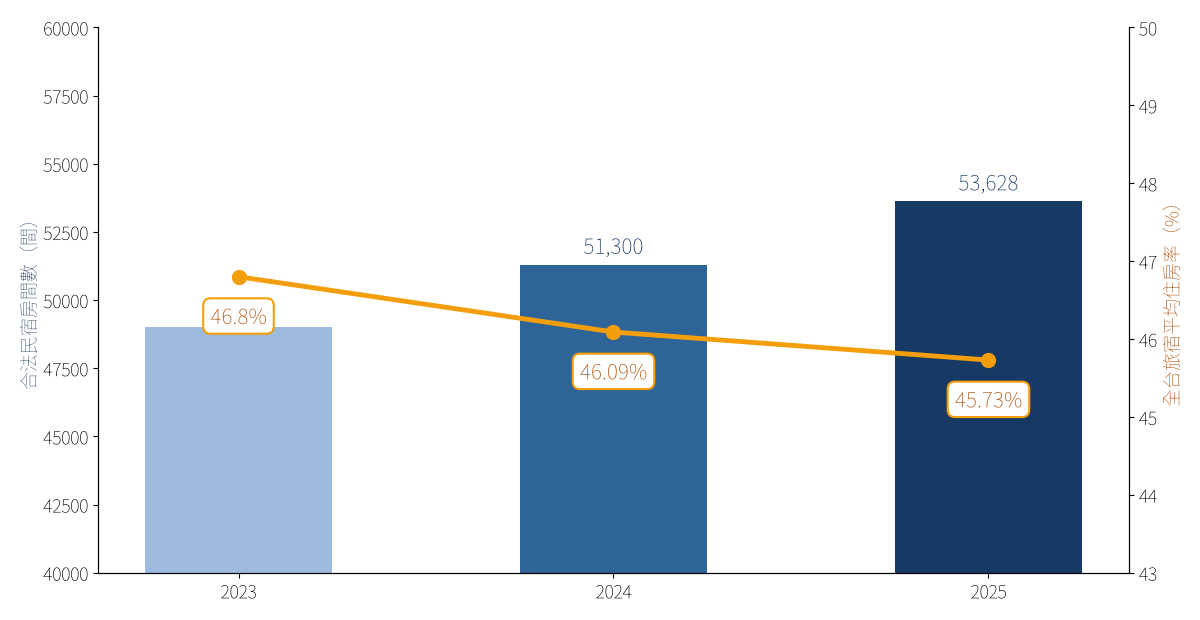
| Item | 2023 | 2024 | 2025 | Note |
|---|---|---|---|---|
| Licensed guesthouse room count | 49,007 | — | 53,628 | An increase of 4,621 rooms in two years, a 9.43% growth |
| Average lodging occupancy rate in Taiwan | 46.80% | 46.09% | 45.73% | Stayed between 45% and 47% for all three years, with a slight decline |
There are more guests, but there are also more rooms, canceling each other out.
The good news is that demand has held up: room numbers increased, but occupancy hasn’t collapsed. The bad news is those extra guests aren’t additional business; they’re being split among more competitors.
The harsh truth about room rates
In 2025, the average room rate was NT$2,984 for hotels and NT$2,438 for guesthouses. Rates rose, but annual growth was just 0.81% and 1.37%—not even keeping up with inflation.
Most noteworthy: about 79% of hotel room rates are below the average. In other words, the NT$2,984 average is driven up by a small number of high-priced hotels; most properties’ actual rates are far lower.
Rate structure · 2025: Average room rates appear to be rising, but most operators are still under pricing pressure
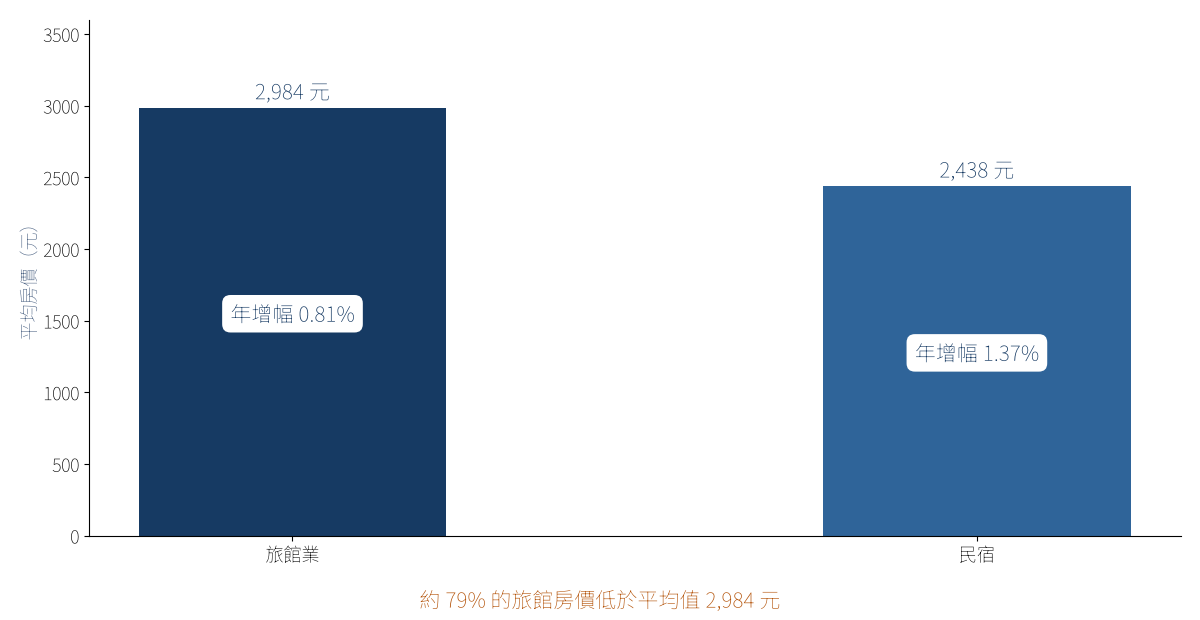
| Category | Average room rate | Year-over-year growth |
|---|---|---|
| Hotels | NT$2,984 | 0.81% |
| guesthouses | NT$2,438 | 1.37% |
- 79%: Hotel room rates are below average
If you’ve ever thought ‘everyone in the industry is competing on price,’ these figures prove it.
So what’s the way forward?
The Tourism Administration cited two key figures: about 25% of travelers want to ‘get away from urban environments,’ and about 70% show strong interest in nature- and ecology-based accommodation. Domestic travel includes hotels and guesthouses, as well as camping, hiking, and outdoor experiences.
Traveler preferences · Domestic travel: Travelers increasingly favor ‘nature- and ecology-oriented stays’
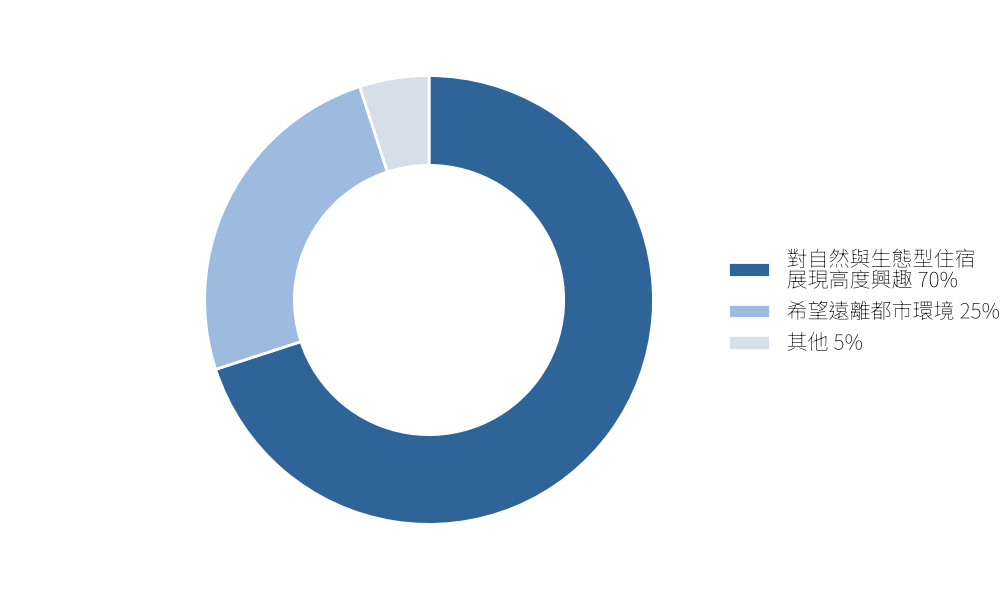
- About 70% show strong interest in nature- and ecotourism-oriented stays
- About 25%: want to get away from urban environments
*Source: Tourism Administration, Ministry of Transportation and Communications (reported by Economic Daily News)*
What does this tell us? There aren’t fewer guests; they’re more selective.
The market has entered ‘a mature phase where segment-specific development and competition on quality are happening in parallel.’ — Tourism Administration, Ministry of Transportation and Communications (as reported by the Economic Daily News)
In practical terms: The market has moved from ‘if you have a room, someone will stay’ to ‘you need to explain what makes you different from the place next door.’ Generic rooms will become harder to sell; distinctive ones can sustain their prices.
Key Takeaways
There are no fewer guests, but there are more rooms and more choices. Rather than joining a price war, protect your rates with clear positioning and a distinctive identity.
- 1
Demand hit a record, but occupancy didn’t rise: Guest visits reached 82.09 million in 2025, but occupancy remained at 45% to 47% for three years. guesthouse rooms grew 9.43% in three years, with new supply absorbing the demand gains.
- 2
Price-cutting is not just a feeling—it’s in the data: About 79% of hotel rates are below the NT$2,984 average. guesthouses average NT$2,438, with annual growth of just 1.37%, making it increasingly difficult to earn a reasonable return through low prices.
- 3
Targeting specific segments works better than cutting prices: 25% of travelers want to get away from cities, and 70% are highly interested in nature- and ecology-focused accommodation. Clearly communicate what makes your place special to be chosen by a specific audience and protect your rates.
Talk to H& about what this means for your property:
- Is my area’s occupancy rate and average room rate higher or lower than the national average? Could you put together actual data on competitors in my area?
- What distinctive qualities does my guesthouse have that I can use to target a specific audience? How do I identify and package them?
- If I don’t want to keep cutting prices, how should I adjust my pricing strategy and room mix without causing occupancy to fall instead?
Join us on LINE for new article notifications
Original source:Economic Daily News
Related Articles

[2026 Guesthouse Guide] How to Raise Your ADR: AI Dynamic Pricing vs. Manual Pricing
Read Article→
APAC Travel Is Being Reshuffled: Which of 10 Shifts Matter to Your Property?
Read Article→
4.29 Million Visitors in H1: Where Will Your Next Guests Come From?
Read Article→
OTAs Are Spending More on Ads This Year—Good News for Your Property
Read Article→